Blog

Short blog posts, journal entries, and random thoughts. Topics include a mix of personal and the world at large. 

That's a no from me

It’s been over a week since I’ve purchased a 2026 Mazda MX-5. Today the salesperson texts me to check-in and make sure I download the Mazda Connect app onto my phone. Strange! Why would the dealership be so concerned with a customer using an optional app? I say optional because, well, the car drives plenty fine without it.

We can all guess the reason: money. Modern new cars are fitted with 5G modems to support connected services in the infotainment system. A part of that ecosystem are branded mobile apps that allow customers to monitor their cars. In my previous 2021 BMW M2, I was able to check fuel levels, see the current mileage, and lock the doors. In Tesla cars, you can even see how fast the vehicle is going and what music is currently playing, right on the app.

If the end user has access to this information, so does the manufacturer. According the Mazda privacy paper, for my new MX-5, this includes:

Driving Data”: driving behavior data, which includes the acceleration and speed at which your Connected Vehicle is driven and use of the steering and braking functions in your Connected Vehicle (Driving Data was collected for each driving trip and transmitted at each Ignition Off); and

Vehicle Health Data”: includes Vehicle Identification Number (VIN); odometer, fuel level, and oil life readings; Diagnostic Trouble Codes (DTCs); and data from the Connected Vehicle’s OBD system (“OBD Data”). OBD Data includes, but is not limited to, engine coolant temperature, fuel injection volume, engine Rotation Per Minute (RPM), and the status of doors, hood, trunk, and hazard lights (Vehicle Health Data was transmitted at each Ignition-Off).

That’s a lot, isn’t it? Automakers can swear to high heavens they are not doing anything nefarious with the collection information, but the truth is in the incentives. My salesperson wouldn’t bug me post sale to install the Mazda Connect app (he also tried during the purchase process) if Mazda wasn’t putting on pressure to do so. Mazda obviously puts high value on that data, and what else if not for exchanging it for monetary gain? I would not be surprised if my declining to install the app will hurt the salesperson’s commission.

But I am definitely not installing the Mazda app. I used the BMW app with the M2 because I didn’t know any better. Just like how Apple refuses to create a backdoor for their iPhone encryption, I want to eliminate any possibility of unintended consequences. Even if I can trust Mazda with data from every time I drive the MX-5, the risk of hacks and beaches exists. It’s safer to not turn on the spigot to begin with.
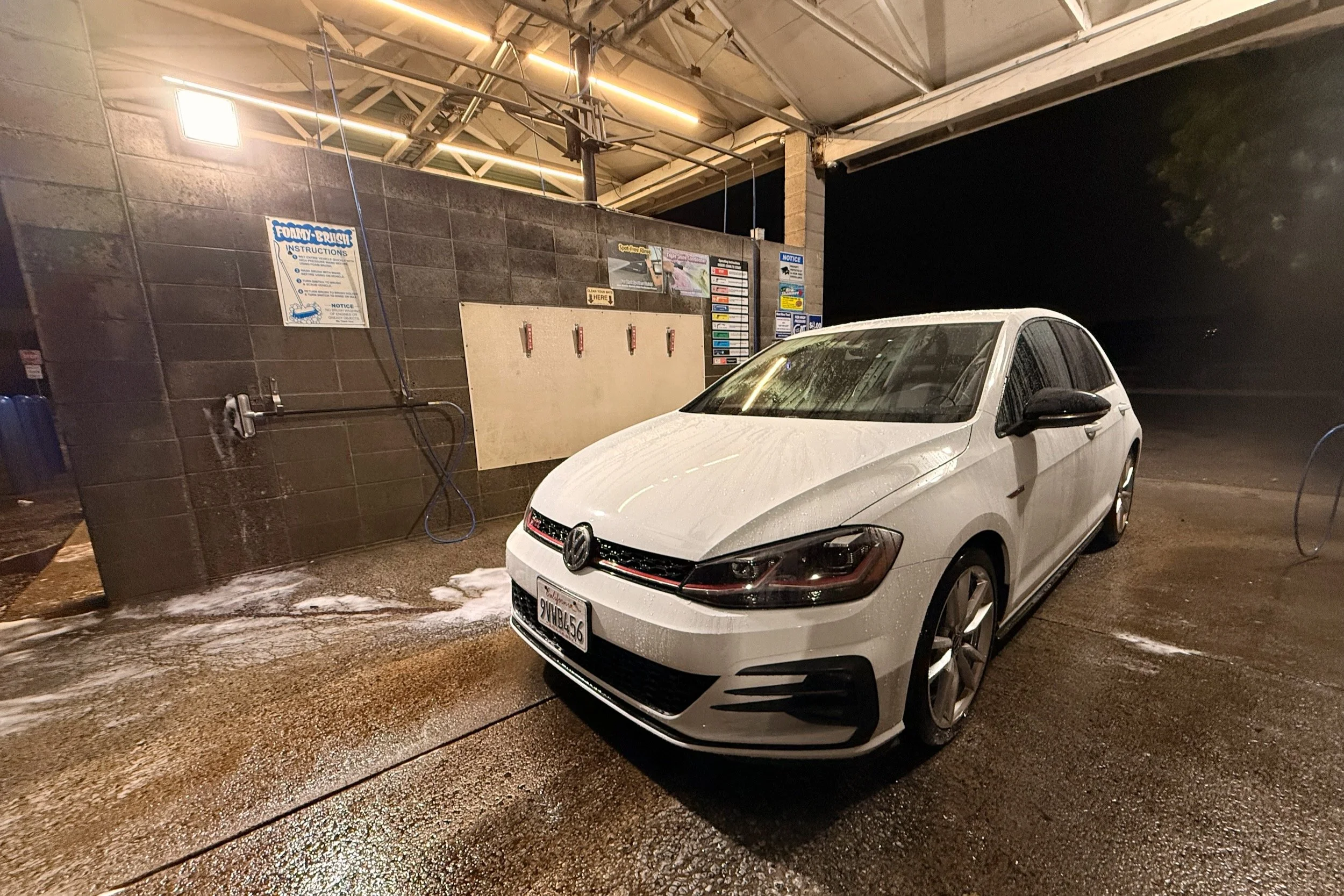
Late nights.

Back it up

This is your periodic reminder to please have an up-to-date backup of your data!

The worst part of my job is informing users there’s total data loss. The user can be working on a manuscript on their laptop. An inadvertent hand suddenly knocks over an uncovered drinks bottle. The entirety of the fluids splash onto the keyboard deck. The screen goes blank. The laptop is unresponsive.

The user brings the laptop to us in desperation. Further bad news: it’s a Mac. Apple locks down their computers so securely that if it doesn’t turn on, there’s practically no way to retrieve the data. At least with a typical Windows PC, you can crack it open and pull the hard-drive. Not so with the mighty Macintosh: the drive is soldered on, and locked behind an encryption chip.

There’s nothing to do but wait for the Mac laptop to dry, and pray that it just might spring back to life. Anything short of that, the data is gone. Because of the Mac’s locked-down nature, data recovery services can’t crack it. (Besides, how secure is it if they can?)

But what about the Apple Store? They simply don’t care about user data. Before they perform any repair - under warranty or otherwise - users have to sign an acknowledgment the hard-drive might be wiped. Even if the repair has nothing to do with the internals!

Folks: have a back up, and keep it up to date. The despair of losing the manuscript you’ve worked many months (or years) on is inconceivable.

Feels like Windows XP.

#DeleteFacebook

Where have you all been? I've long deleted my Facebook account! 

I quit the platform because I felt it to be a massive time drain with no real intrinsic value. I really didn't need or want to know how an old classmate from elementary school is doing, and the majority of people on my friends list were of that ilk. For sure it was novel to get in touch after a long time at first, but that quickly wore off. The friends I truly value and converse with on a daily basis I already do so outside of Facebook. 

The fact that Facebook mines user data with potential for nefarious acts wasn't even a factor in my decision to quit. I didn't put too much mind towards cyber-security back then, contrasting to the present where every front-facing camera on my computing devices gets covered, and I two-factor authenticate the heck out of all web accounts. 

I've been reading with great humor the mess Facebook have gotten itself into recently with the news that an outside firm has collected huge amounts of user data (through then legit means) and used them to put out targeted adverts and posts to sway opinions. I'm failing to understand the outrage: isn't that how the Force works? Facebook is built upon exploiting (too strong?) its culled data to sell advertising!

Sure there's an implicit trust we give to these companies to safeguard the information, but these scales are so massive that unintended consequences are sure to materialize, nor can these companies police absolutely every single piece of ones and zeroes. As long as the spigot is open, it may not be entirely clean water that will flow through. 

Which is why people need to be cognizant about precisely what they share on these platforms, and that any data they input can potentially be used however which way by first and third parties. That's the price of entry for an otherwise "free" product. If that notion frightens you then perhaps do as I have done and pare down the number of social media accounts to bare minimum (I found it difficult to quit social media completely). 

But it isn't only social media accounts, is it? Most other online web services we use operate on the same business model. Amazon surely profits from owning the purchasing patterns of millions of shoppers. Our search history in Google's battery of applications fuels most of its revenue stream. Unlike quitting Facebook, it's really difficult to stop use of these platforms.   

I think it's futile to put complete faith in these companies to not ever do us harm (read: Equifax hack). It's up to the individual to do periodic audits on the information we have out online and adjust accordingly.