Blog

Short blog posts, journal entries, and random thoughts. Topics include a mix of personal and the world at large. 

Verdict from GIMS 2019: electrification

Media day for the 2019 Geneva Motor Show was yesterday, and there’s plenty of exciting stuff to see. I’ll leave you to peruse the major media outlets for an outline on each and every new model; rather I’m going to touch on the major theme I see at this year’s Geneva show: electrification.

Dread it, run from it, destiny arrives all the same (thanks, Thanos); the automotive industry is rapidly shifting from internal-combustion to the electric motor, and it’s all readily apparently when looking at what’s being displayed and talked about in Geneva. Super cars have a need for electric power in order to achieve ever lofty performance numbers: both Ferrari and Aston Martin will be turning to turbo V6 engines with hybridization for their next generation products. Normal city cars are converting to full electric to satisfy increasingly stringent emission standards: German manufacturers are promising massive electrification of their portfolio in a very short timeframe.  

I don’t suppose in any of our lifetimes we’ve seen such a paradigm shift on the motive power of vehicles. The combustion engine has been de rigueur for the longest time, and it’s only rather recently the industry have changed from natural aspiration to small displacement turbocharged motors – for the sake of efficiency and lower carbon outflow. It appears this ‘turbo era’ will super short-lived: full and partial electrification is quickly arriving.

Let’s look at the brilliant Honda Civic Type R. The latest generation have only just made the switch to turbocharging after a long history of fantastic atmospheric engines, and now Honda is already announcing the next Type R will be an electric hybrid. We can thank tight emission requirements for this one: Honda could easily squeeze more power out of the turbo engine, but adding an extra electric motor instead makes it far easier to achieve that extra power, but with zero penalty at the tailpipe.

The automotive landscape is transforming right before our eyes, and the rate of change is something I did not anticipate to be so swift. My 911 GT3 is 2015 model year car, yet it’s already feeling like a relic of the past: a gas-guzzling sports car with a non-turbo engine.

To be clear, I am not against electrification: I think fully electric vehicles are fantastic for dense urban commutes. Once the powers at be figure out the technology to deliver “refueling” technology for electric at the same speed as the ubiquitous petrol station, electric cars will be a good fit for suburban and rural communities, too. For the sake of cleaner air and a healthy populist, the switch to electrification is a worthy process.

However, for the weekend sports car type of vehicle, electric motivation just doesn’t stir the soul. Once you get pass the accelerative prowess of an electric car, what’s leftover is, to me, immensely dull. I want an engine that speaks to me: a thundering howl as the revs climb, pops out of the exhaust on a throttle ease, and the clattering of the mechanicals. This is the sort of motoring joy I grew up with, and I’m going to cling to that ethos for as long as possible.  

I intend the GT3 to be my ‘forever car’, and the electrification of the automotive industry isn’t helping to convince me otherwise.

Here we have the Golf GTI in its natural habitat.

Here we have the Golf GTI in its natural habitat.

Why can't we stop at the 458?

It’s the opening week of the Geneva Motor Show, and us car enthusiasts always look towards the annual event with keen interest. It’s the auto show where European sports car manufacturers most often choose as the platform to introduce new products. I still fondly remember laying first eyes on the 991 GT3 when it made its world debut at the 2013 Geneva show, not ever imagining that five short years later, I’d actually own the car.

Indeed I am properly on team Porsche, though we’ve still got some days yet until the latest from Zuffenhausen shows its face. Perhaps the much anticipated 718 GT4 will break cover?

Ferrari chose to release photographs of their newest car ahead of the show, and it’s this, the Ferrari F8 Tributo:

Photo credit: Ferrari

Photo credit: Ferrari

Insane naming convention aside (what is it in ‘tributo’ of, exactly?), the latest V8 Berlinetta from Maranello is easily the most beautiful interpretation since the beloved 360 Modena. Littered allover with design homages to famous Ferrari cars of vintage, the F8 Tributo looks fluid yet intricate, but crucially lacking the odd shapes and extra appendages that have plague modern Ferrari styling. No doubt the order banks will be filled in short order.

I’m actually surprised Ferrari is introducing this “new” car, seeing as the 488 GTB - its predecessor - is not exactly old (debuted in 2015), nor inadequately slow (the earth scorching 488 Pista was only just released last year). Not sure why Ferrari felt the need to do a refresh here: the 488 is already a refresh of the 458 Italia, so this F8 Tributo would be the third update to the same platform/shell that’s been in production for a decade.

I get it, the clientele wants statistically ever faster and better cars. Rival McLaren have come on strong these past eight years, and it’s been heavy punches one after another. There were some early teething troubles, but from the 675LT onwards, McLaren have simply continued the onslaught of world-class super sports cars. With the next-generation car presumably not quite ready yet, the F8 Tributo is the best answer Ferrari can do as of now against the acclaimed 720S.

Unfortunately, it remains a 10 year-old aluminum design against McLaren’s trick carbon tub.

It’s difficult to believe it’s been a decade since the 458 was first produced, and what spectacular specs it had: 4.5-liter, 562 horsepower atmospheric V8 that revs to 9,000 rpm; 0-62 in 3.4 seconds. Those numbers aren’t just great for 2009; they would still be hugely competitive against the contemporary set (certainly faster than my 2015 era 911 GT3). It wouldn’t be the final word in ultimate pace, but is that really necessary? Mid-500s horsepower is plenty for drivers, and no amount of turbochargers can ever compete against the sweet sounding howl of naturally-aspirated engines.

I reckon if Ferrari were able to keep making the 458 today - assuming emissions and safety regulations aren’t barriers, it would sell quite well against the 488 or this new F8 Tributo. Modern super sports cars have gotten so quick and so powerful it’s practically driving a stat-sheet: the limits are far beyond what mere mortals can access on a race track, much less a public road.

Why can’t manufacturers reach a satisfactory formula and simply keep making it? Porsche would sell every 997 GT3 it makes if it continued to produce them today - look at all the pristine used samples selling for big money on Bring a Trailer. Maybe Subaru had the correct strategy all along: they’ve been selling largely the same WRX STI since 2004.

Of course, the arms race has to go on: bigger numbers and faster stats sell cars, so the innovation have to keep pace. The Ferrari F8 Tributo is a but a stop-gap measure before the next-gen platform is ready, most likely with LaFerrari-like hybrid power.

It must be Spring. Soon.

Are we sure about electric vehicles?

Somewhat surprising news from Porsche today when it announced the next generation Macan sports-utility vehicle will be entirely electric. The current lineup of petrol engines will be no more. It seems the Taycan sedan is but the first salvo in an all-out assault on electric vehicles for the company in Stuttgart.

The announcement came as a surprise to me because the current Macan is the best selling Porsche car by some margin - 1/3 of all Porsches sold annually, a veritable money printing machine. To switch the motive power of their most popular model to completely electric within one generation is quite a strong bet: that our immediate motoring future is electric.

My question is: are we sure about this?

Due to marketing forces I can’t understand, much of the auto industry is shifting focus to electric; the upstart Tesla have really started a revolution (pun fully intended) indeed. Manufacturers are either already producing fully electric cars (Jaguar i-Pace, Audi e-tron, BMW i3/i8, etc) or are actively gearing up to make them (Mercedes Benz, GM, Honda, etc). The discussion doesn’t include hybrid powertrains anymore - that is so early 2000s. Rather, the industry is poised to ween itself off the internal combustion engine.

There is one marketing force I can understand: money. Innovation brings customers to the showrooms, and for better or worst, Tesla have made electric cars the glamorous thing to own. Much like television makers jumping from 3D to 4K and soon 8K, enticing people to upgrade for no practical reason (3D is dead, and 4K programming is not the least ubiquitous), automakers are seeking a similar splash in a super mature industry. They see Tesla causing Apple-like frenzy with each vehicle launch, and they want in on that action.

Outside of money, where is the impetus for electric vehicles exactly? People want to make the argument of zero emissions, but don’t batteries need to be mined and produced? Energy generation in cities and countries - to charge the cars - surely isn’t free of pollution. Even if I were to grant that electric vehicles are cleaner in aggregate than the petrol counterpart, the massive infrastructure overhaul required to accommodate this new mode of “fueling” isn’t going to be inexpensive, either.

Not to mention charging times have yet to even come remotely close to that the traditional gas station. And plenty of people don’t live in quarters that can easily integrate vehicle charging. My apartment of no parking garage sure isn’t one.

Obviously a huge part of this is me simply being a curmudgeon about electric cars. I grew up on and adore the petrol combustion engine, and it will be a sad day indeed when that technology is left to the history books. These latest wave of news just makes it seem like that day is right around the corner. Automakers have switched attention to electric at a much faster rate than I had expected and wanted. Porsche plans to have half of their vehicle lineup be electric by 2025, and that really isn’t that far away.

It’s good to see, then, not all manufacturers are abandoning the petrol engine: Mazda will soon mass-produce a compression-ignited gas engine - the Japanese company have yet to produce even one hybrid model. Meanwhile, Toyota isn’t yet convinced on the idea that electric vehicles are the bright future other automakers are so dumping R&D money into.

Wouldn’t it be hilarious if electric cars turn out to not be the future of motoring.

Ah yes this is much better.

Ah yes this is much better.

Oscar party 2019

Much like the Super Bowl, the annual Oscars ceremony is a special occasion for me and my friends to sit in front of the TV and hang out. Of course we haven’t actually watched many of the movies nominated; that isn’t the point. The point is to be together with friends, eat food, and view the telecast with an eye towards humor. Who’s wearing something absurd? Whose acceptance speech went too long and the producers turned off the microphone?

This year’s Academy Awards also had a bit of suspense, because there was no clear front-runner for the Best Picture category; a succinct lack of a La La Land this year (that’s the joke). Heading into the evening, any of the eight nominated movies were liable to win, except for Black Panther, because pandering to popular, culturally-relevant super hero films has its limits. Fans of the MCU should be just happy it got nominated, and nothing more than that.

The surprise was palpable both live in the Dolby Theatre and at our gathering when Green Book was announced as winner of Best Picture. My money was on Roma, and that bet was going swimmingly as the movie won a few of the awards - including Best Director for Alfonso Cuaron - throughout the event. I think I can safely say no one had Green Book in their betting pool, and it seems the producers of the film themselves were not expecting the victory.

The response on Twitter was swift and hilarious. People couldn’t believe such a mediocre movie won Best Picture, while so called ‘Black Twitter’ were fed up with being pandered to by old, white Academy members voting for “white savior” movies. Green Book broke the camel’s back because of its historical inaccuracies and the fact the family of the main character portrayed have publicly denounced the movie. Perhaps this would have been a good year for the La La Land - Moonlight mix-up.

Nevertheless, kudos to the guy who won for Production Design: his realization halfway through his partner’s acceptance speech that he wasn’t going to have any time at all to recite his own. What was likely the absolute height of his career and yet not one word in, other than shouting out his crew as the camera cuts away to commercial. Top man.

Also kudos to the winner who wanted to thank her two kids, but only managed to name one. It necessitated her husband to interject and say the name of the other child, who henceforth will forever know - along with anyone that’s watched the Oscars this year - that he is not his mother’s favorite.

There shall be no mistakes.

There shall be no mistakes.

Not a fan of giant screens in cars

Warning: ‘old man yells at cloud’ rant coming up.

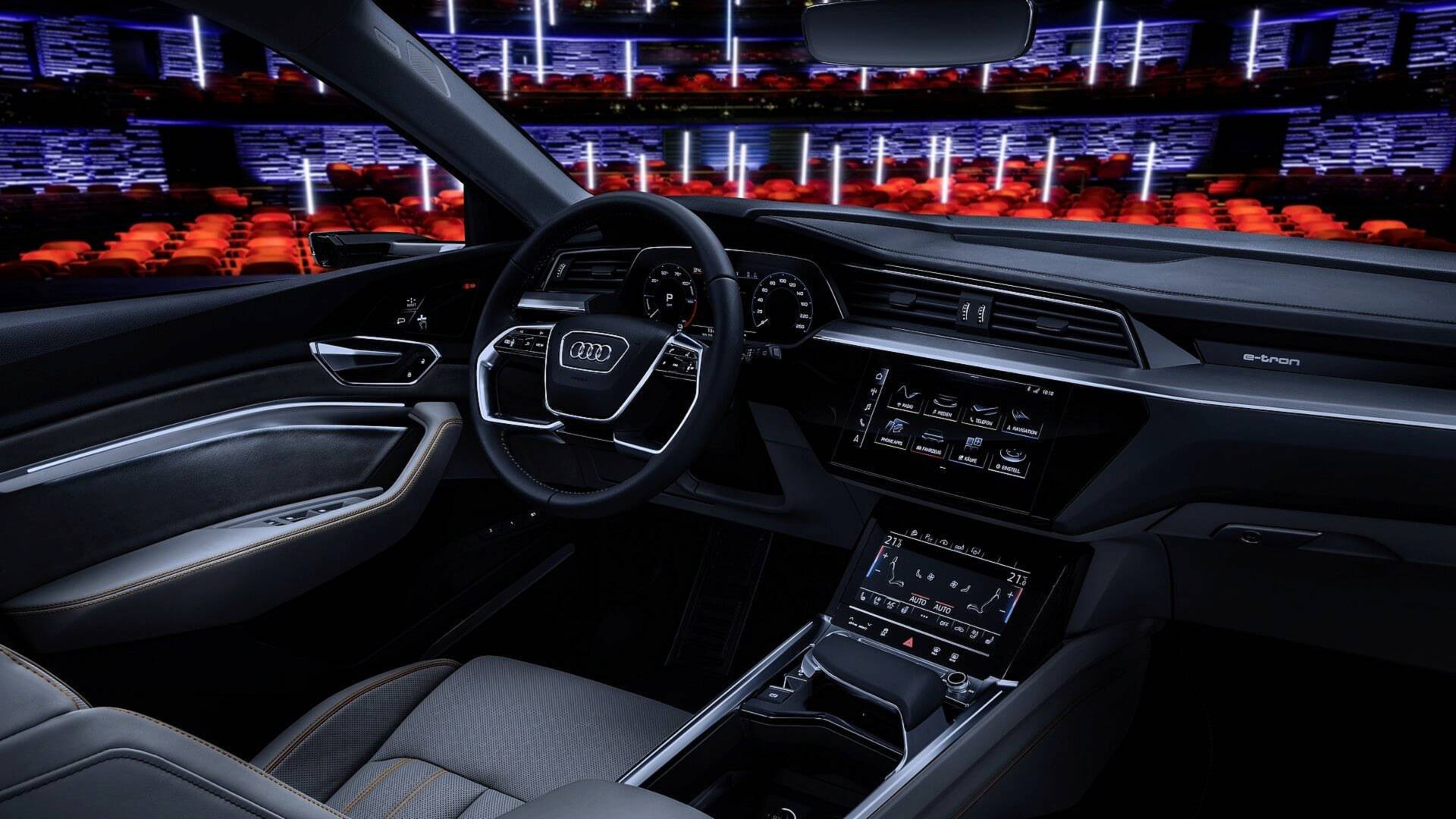
It seems I’m the only person who is not wild about the latest trend of ginormous LCD screens permeating into modern automotive interiors. I’m not referring to the regular display for navigation and the sound system, but rather the giant screens automakers are utilizing to do absolutely everything, looking like an iPad glued to the dashboard.

I reckon the genesis of it started in the Tesla Model S, with a 17-inch center screen serving as proxy to perform even the most basic of functions, such as adjusting the fan speed. Admittedly it was quite the party piece for Tesla, especially when contrasted to the traditional buttons and knobs of its contemporaries. Unfortunately, novelty have begotten standardization, and as the Tesla brand proliferated and gotten more popular, other automakers are seeing fit to copy the big screen implementation. Because customers want ‘cool’.

And the trend have thoroughly trickled down to the masses: the new Subaru Legacy can be optioned with a nearly 12-inch infotainment screen, absolutely dominating the entire center dash like a Tesla car. In a way it makes sense: smartphones are giants touchscreens, so presumably the transition to having them in cars to control functions is a natural extension of something we use every single day.

However, it gets worse. LCD screen in cars have encroached into the instrument binnacle as well, with manufacturers seemingly in a competition to replace as many items of the interior with touchscreens as possible. The latest Audi and Land Rover products are already there - Audi wants to replace the wing mirrors with screens, too - and Mercedes will soon join them if spy shots of the next generation S-Class are good indication.

An interior that is entirely screens: that is a future I don’t particularly want. I shall cling to the mechanical dials and physical buttons of my GT3 as long as I can.

Why are automakers so massively embracing these screens? For sure part of it is to emulate the same wow-factor of a Tesla Model S , but I surmise the base reason, as with any capitalistic endeavor, is to save on costs. In a world full of laptops and smartphones, LCD screen technology comes relatively cheap; all automakers have to do then is develop the software. Modern cars are full of computers anyways so integration is likely not difficult. I’m sure it’s far less complicated and expensive than engineering individual physical buttons and dials, with relays and switches for each single item.

If car manufacturers save on cost, does the customer as well? I’m going to guess no. A broken interior button is a cheap fix, but an entire screen module? That sounds painfully expensive. In using our computers and phones daily, we know all too well that screens aren’t the most durable of things. And there’s another problem: those devices also have tendency to periodically freeze up, necessitating a hard reset. I can’t wait for automaker’s customer support to have to ask this question: “Have you tried turning off and turning the car back on?”.

I have serious reservations about the longevity of these all-screen car interiors, but who am I kidding: you’re all leasing, right?

Stacks on stacks on stacks.

Stacks on stacks on stacks.

Hang on, I'm still here

Hello there! Yes, I am still quite active on this website, just not where you’re used to finding me here in the Words section. I’ve been massively busy writing articles for the GT3 Diaries, a vertical dedicated to showing my journey of purchasing and owning a Porsche 911 GT3. Please do check out that section often, because I surmise it will be more active that this blog; there’s far too much to do with such a glorious machine.

And then there’s the enormous backlog of photographs from January’s two weeks in China I’ve still yet to edit through. There will be photo stories to accompany the pictures once (if?) it’s all finished, so yes, even more writing to come.

Again, there’s lots of activity on this website, just not much on the blogs. Nevertheless, I’ll try to squeeze in some written thoughts here and there. It’s good exercise to cleanse the mind, to articulate into words what I’m pondering about. As usual, plenty to do, not nearly enough time. Exciting times.

9K all day.

Why do we need self-driving cars?

Over the weekend I encountered this little nugget on the twitter:

Indeed, what lot of people were clamoring for self-driving cars anyways? Sometimes we get so enamored with new technology (oh my god this car is driving itself!) that we forget to detach and look at the bigger picture. What exactly is the endgame of self-driving cars?

To make a certain few people/companies lots of money.

Because it most certainly isn’t about safety. Motor vehicle fatalities have continued to hover at all-time lows, and vehicles are as safe as ever with hardy crumple zones and a battalion of safety systems (government regulations sometimes work okay). There isn’t really a great need for cars to drive themselves, to take away the innately flawed human element. The push isn’t from the average consumer either, because they couldn’t possibly afford self-driving technology at its nascent. The typical Tesla Model S with its rudimentary “auto-pilot” system costs six figures. Who but the 1% can afford that?

In a capitalist society, people with means are constantly on the chase for the latest Facebook or Uber: exponential returns. In a super mature sector such as automobiles, blue oceans with massive growth opportunity is difficult to come by. Incremental and steady growth is the norm. In order for sizable gains to occur, companies must innovate with something truly new for the public to lust after. See Tesla and EVs.

Makers of televisions have got this down to a science. When the HD revolution happened in the early aughts, people bought TVs in droves to experience the new stunning picture quality. Once that well ran dry, the makers pivoted to 3D (thanks, James Cameron), enticing yet another round of upgrades. When 3D passed on into oblivion as the fad that it is, 4K resolution became the new carrot on the proverbial stick.

In that way, self-driving technology is simply a ploy to make a tremendous amount of money, enticing people to switch out of their “dumb” cars. I don’t see any altruistic reason for its existence, not the least because truly Level 5 autonomous driving is still decades away.

If the powers at be truly wants to further decrease vehicular accidents and death, the best and most efficient way is to require advance training for all drivers. I think we’d be much safer if attaining a driver’s license is made more difficult and strict. Then I wouldn’t need to be on constant lookout for Nissan Altima drivers.

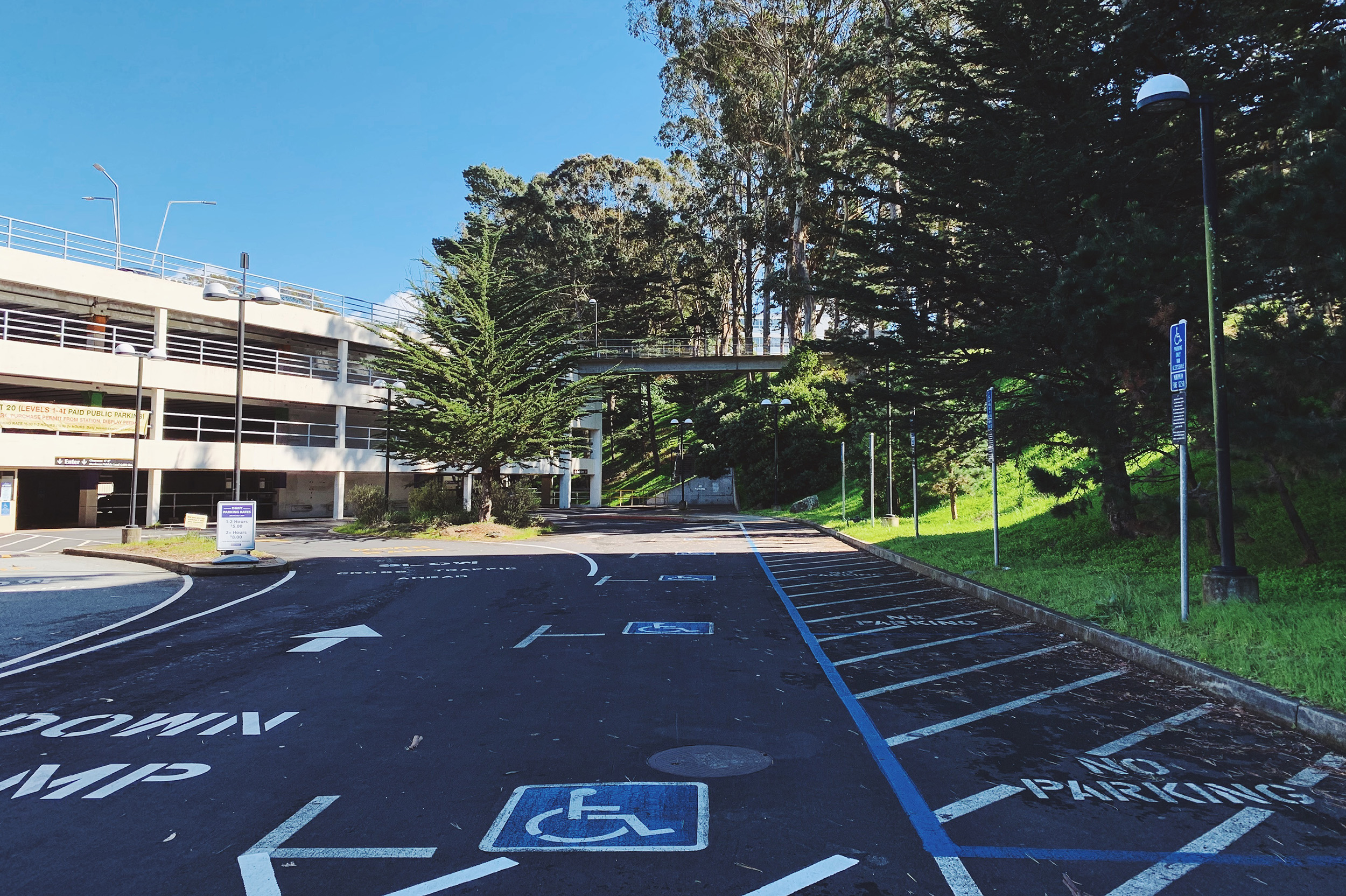
A minute after I took this photo, someone got their purse snatched. Stay classy, San Francisco.

A minute after I took this photo, someone got their purse snatched. Stay classy, San Francisco.